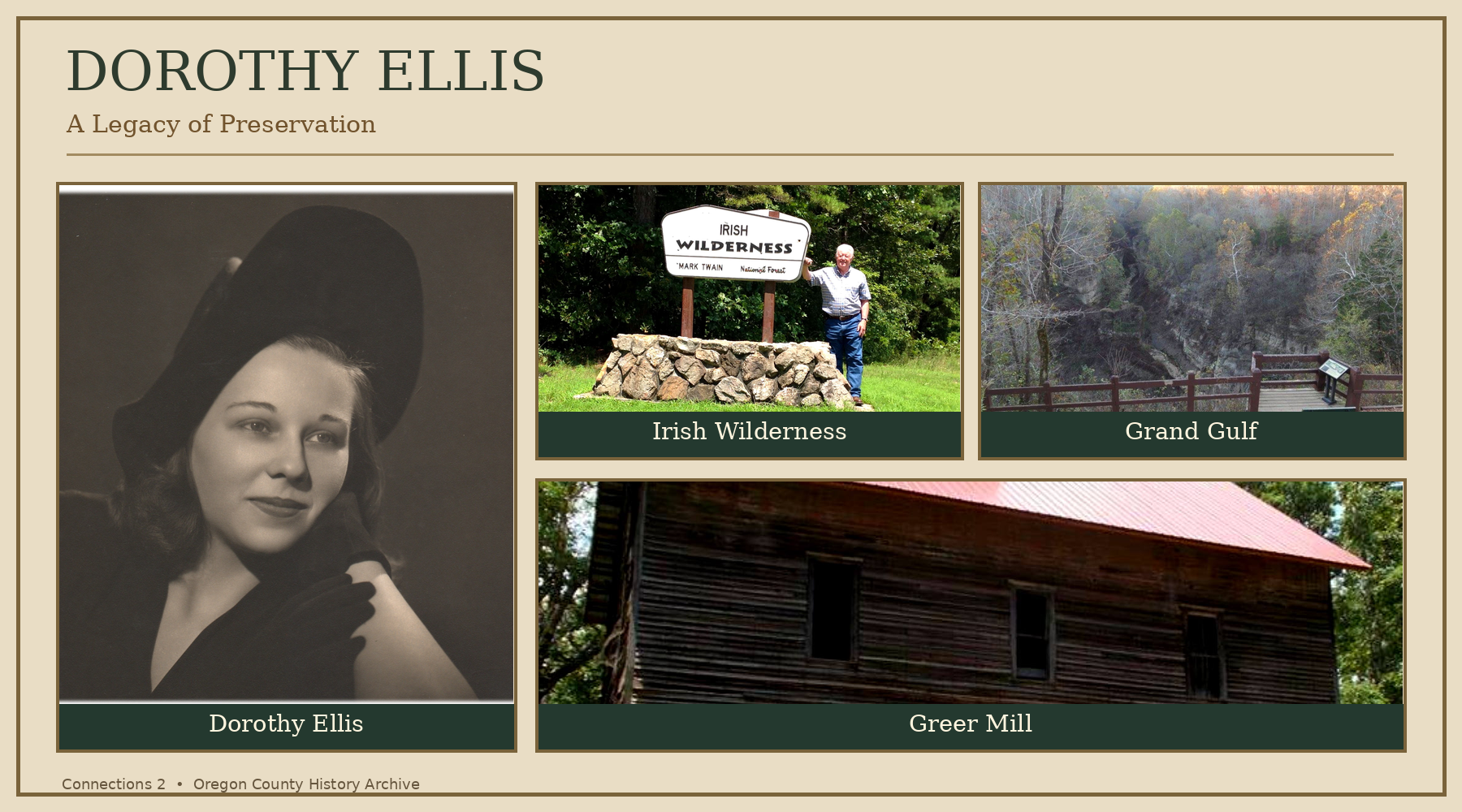
Oregon County, Missouri · Preservation, public service, and the places she helped protect
A lifetime of persistence
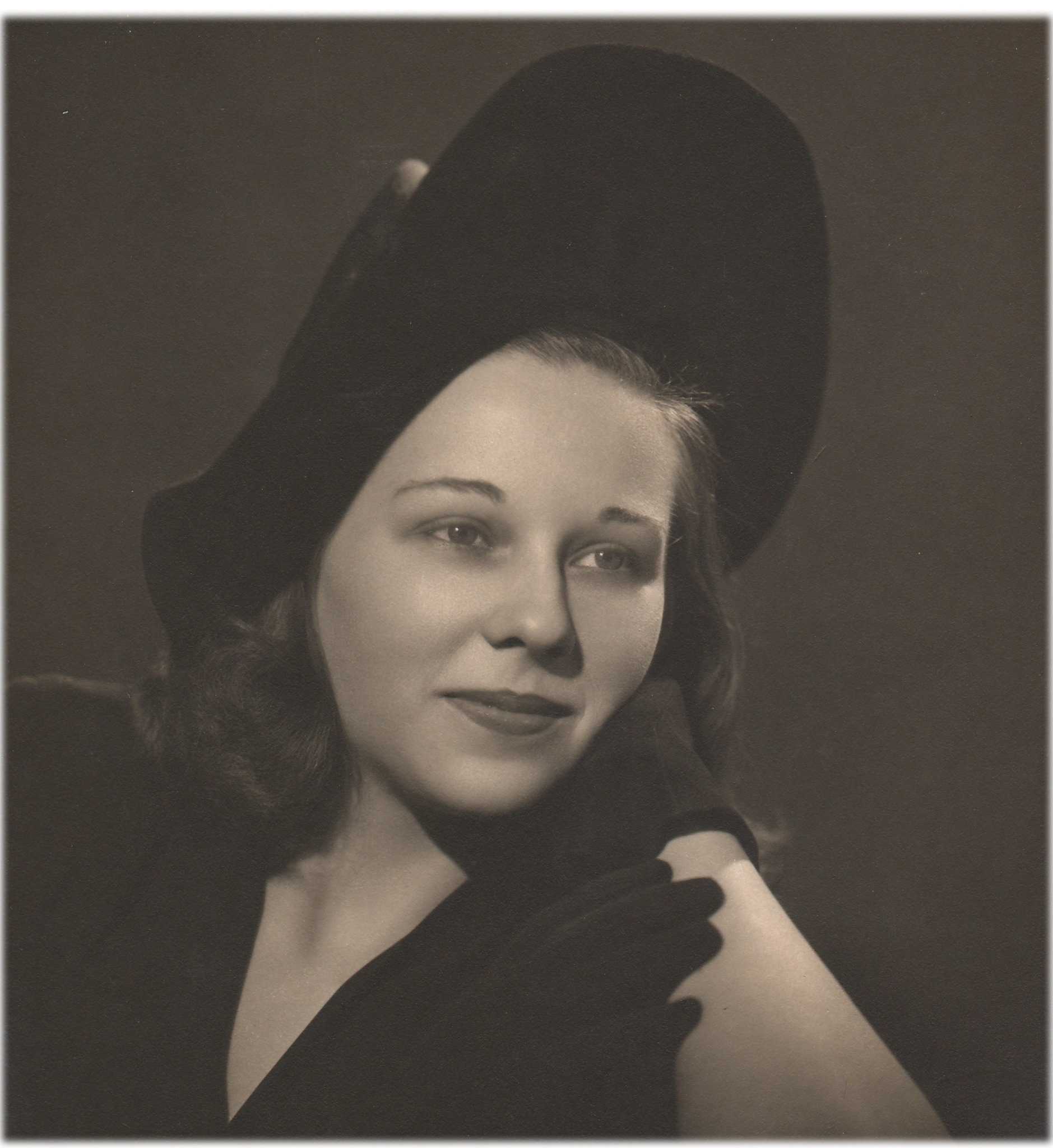
Dorothy Woolford Ellis (1920–2016) grew up near Koshkonong and helped champion preservation of Grand Gulf, the Irish Wilderness, and Greer Mill and Spring. Her public service also included the Oregon County Court.
About these sources: Jenny Underwood's essay is reproduced below as a contributed historical narrative. Newspaper images and the working Dorothy script are separate historical sources. Personal recollections and disputed details are attributed, not silently converted into verified facts.
Other related subjects: Grand Gulf State Park, the Irish Wilderness, Leo Drey, and Oregon County government. More direct archive connections can be added as those records are published.
Original narrative: Dorothy Ellis and Her Long Game
Contributed text by Jenny Underwood. Reproduced from the supplied RTF; paragraph flow normalized for reading. The source file remains preserved separately.
Dorothy Ellis and her Long Game
Dorothy Ellis has a legacy of preserving Natural Resources in Oregon County: Grand Gulf, the Irish Wilderness, Greer Mill and others. She would talk to people and find out who made the decisions. Then she would talk until she won. Sometimes it took decades, such as in Grand Gulf which took over forty years. The Irish Wilderness preservation project took thirteen years. But she never gave up. Her efforts are a large part of the historical and preservation legacy of the inhabitants of Oregon County and is shared with visitors from around the world who visit these special places.
Grand Gulf
Dorothy Ellis grew up in Koshkonong, Missouri after her father moved there to grow peach orchards during the heydey of Kosh being “Peach Capital of the World.” They lived near Grand Gulf and attended church near there. On Sundays, there would be dinner on the grounds, and the children would hike down into Grand Gulf, playing and exploring the caverns and caves. They could hear the river running behind the wall of rocks up until a tornado destroyed the access. She reminisced, “I didn’t realize how special Grand Gulf was until I was 17 or 18 years old. It was unique to Oregon County and the entire Ozark and Missouri area.”
She said, “I noticed debris and garbage being thrown over the side and trashing up the bottom. Someone pushed and old car over the edge as if the Grand Gulf was a place for junk. I just couldn’t hardly stand it.”
She married Doctor Claude Ellis, a local Dentist from Thayer, Missouri. He was a political activist and went to Jefferson City often to lobby for causes of the Democratic Party. Dorothy would accompany him and decided she needed a cause; she would save Grand Gulf by having it made into a State Park and be preserved as a conservation area and a destination.
This was long before people were aware of the term “Environmentalist.” HIstorically, conservation was the word used to preserve natural resources and sites. Dorothy wasn’t big on naming conventions. She just wanted to save her Grand Gulf from being a hole filled up with junk. She didn’t realize at the time that she had a long game ahead of her.
So she started talking to anybody she met in Jefferson City, especially elected officials, about what a special place Grand Gulf was and how it needed to be made into a State Park. She worked with State Park officials and created a team of people who were with her on her journey. One day, in the lobby of the hotel, she heard these two guys say, “Here comes that woman. She is from some county down south that has a place she wants made into a park.” She walked right up to them and gave them an education so they never forgot about Oregon County nor Grand Gulf.
This journey took forty years of talking and convincing. Dorothy was very charming and smart. It was almost impossible to get mad at her even if you disagreed with her fundamental causes. Finally, during an administration change in 1984, she and her band of preservationists sneaked through a bill to make Grand Gulf a State Park in a twelve hour window before the new administration took over. This was just the beginning because later on, appropriations had to be assigned, and work be done to preserve and enhance the park.
The work was at a standstill because of lack of funding. Dorothy heard of a fellow named Leo Drey who had purchased forest land in the Ozarks, some in Oregon County. One day she was invited to a barbeque being held at the Coon Club in Myrtle, Missouri. She thought she would not go because it would be late and dark getting home on those old country roads. But when she heard Leo Drey was going to be there, she changed her mind, and history was made. She sat next to Leo and Mrs. Drey and told them the story of Grand Gulf. Leo Drey had inherited a fortune from his family who manufactured canning jars. He spent his life and fortune buying up forest lands in the Ozarks.He formed the L-A-D. Foundation in 1962 with its principal mission to protect natural areas. Beginning in 1964, for the next 10 years, Leo Drey made a series of land donations to the Foundation.She became great friends and convinced Leo to come along with her on several of her preservation journeys. She talked him into purchasing the Grand Gulf and the surrounding land. He leased the land back to the Missouri Department of Natural Resources for $1 per year.
In 1971, Grand Gulf was designated a National Natural Landmark; in 1984 the property became a Missouri State Park through a lease with the Missouri Department of Natural Resources. In July of 1986 a 60-acre portion of the L-A-D Foundation property was designated as a Missouri Natural Area.
Today Grand Gulf stands a special place that Dorothy Ellis always knew it would be. Work has continued to improve the park with walkways and overlooks. Thousands of people visit each year and locals love to visit the unique area. The L.A.D. Foundation describes the park at as:
“Known as Missouri's Little Grand Canyon the geological features of this site demonstrate the formation and subsequent collapse of a cave system. The result is a canyon whose nearly vertical walls reach 100 feet or more and whose length reaches 3/4-mile long. The canyon here is deeper than it is wide. The stream, Bussell Branch, drains more than 20 square mils before dropping into the chasm and while there flows beneath a 200-foot long natural bridge. By itself the natural bridge would be well worth a visit; it is the only piece of the cave roof which remains. Bussell Branch continues through the canyon before entering the mouth of the cave which has been blocked by accumulating debris. There the water slowly passes underground before exiting again at Mammoth Spring, about three miles away in Arkansas.”
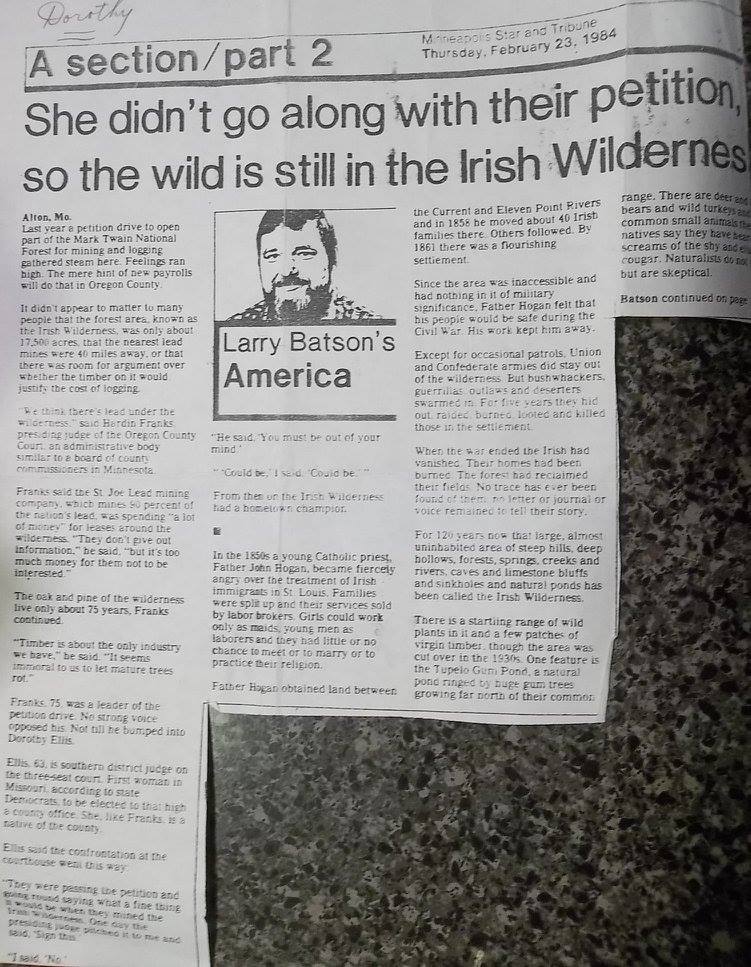
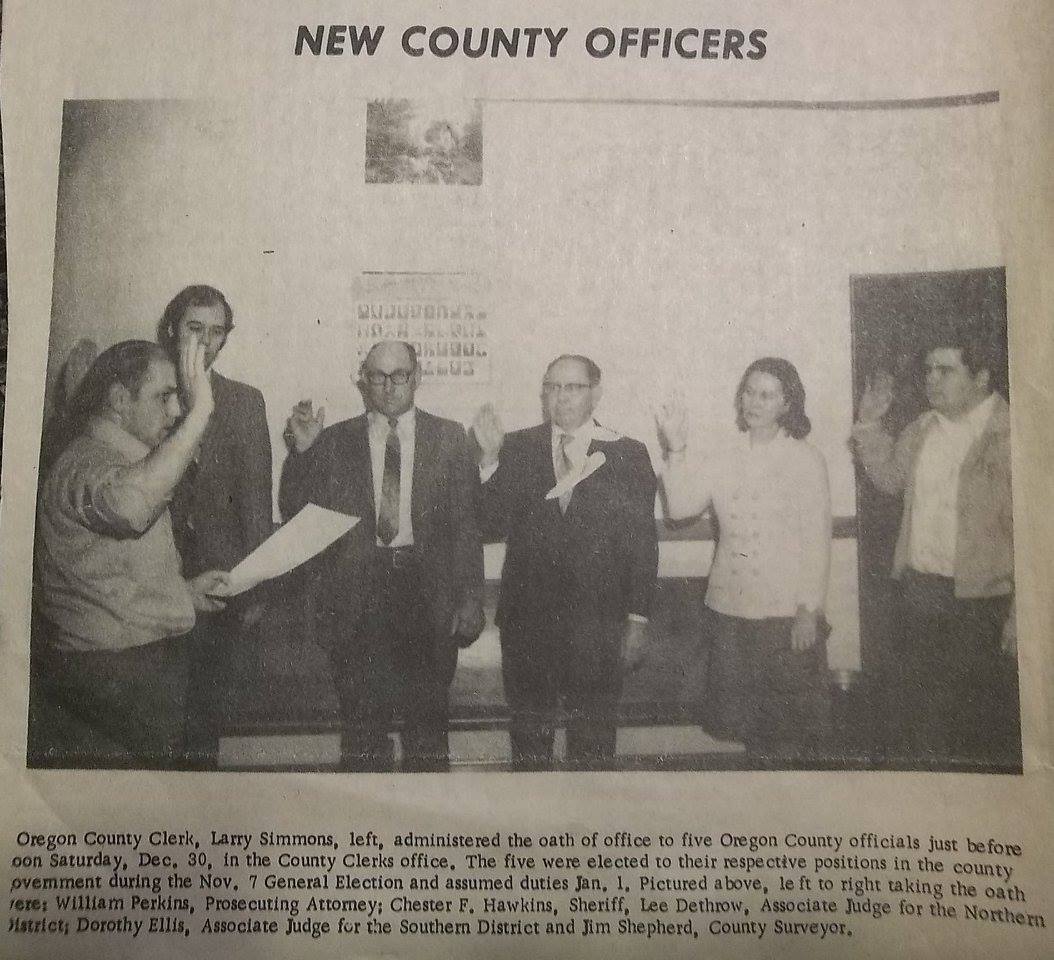
Dorothy was known for her Grand Gulf cause in Jefferson City, and when a position as an Oregon County Judge (now called commissioners) came open, Governor Hearns called her and asked her if she would serve. She told him she didn’t know if she was qualified and to give her overnight to think about it. The next morning Governor Hearns called and said he had already issued a press release, which made her the first female in the state of Missouri in that office. After her appointment, she had to campaign to keep her job. So she did politics the old-fashioned way; she went door-to-door and visited every accessible house in the Southern District of Oregon County.
Her charm and beauty were never overshadowed by her intelligence and persistence in causes she believed in. She served her constituents faithfully and with a long game in mind.
The Irish Wilderness
While she was in the courthouse, she heard rumors of a company called St. Joe’s Mining Company who wanted to come to Oregon County and mine for lead in the Irish Wilderness. They had done a test in the area and determined they could extract lead from there. The courthouse was all in a dither with excitement at the possibility of jobs and a boost to the economy.
Dorothy was skeptical. She loved the Irish Wilderness which had been decimated by logging in the early 1900’s with tree stumps and debris all over the land and waterways. When asked, she said she didn’t support the mining project. In fact, she decided she would fight it.
She said, “Everybody was so mad at me and tried to stop me from my mission, but I enlisted the help of my friends from the Grand Gulf project.”
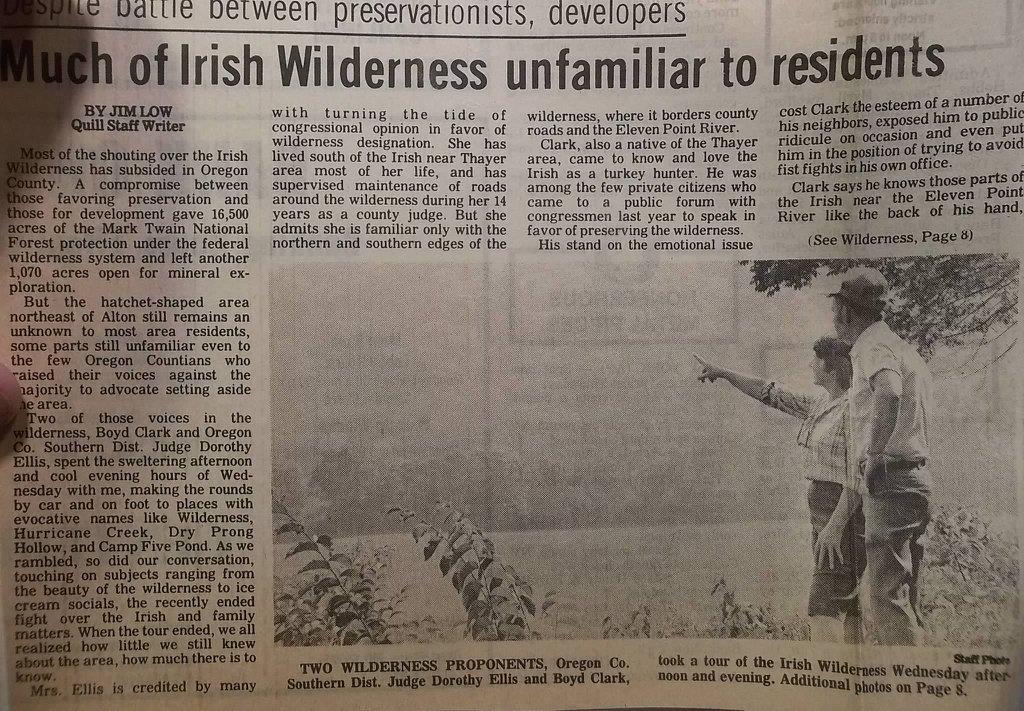
She used every political alliance she had because she didn’t want to see the Wilderness destroyed by mining. The forest was a national treasure to her. Her local representative in Congress, Bill Emerson, fought her bitterly, but she invited congressional members of the committee to visit the Wilderness, starting with a float trip on the Eleven Point River. She describes the day as magical, and the committee members fell in love with the Wilderness, just as she had. She still had years of work to get it preserved. She started out asking for 50,000 acres, and Representative Emerson kept asking her to compromise, which resulted in the preservation of the central portion. She faced bitter opposition from landowners in the Wilderness who would be unable to sell their land or farm the area. Most moved out but some stayed with 50 year leases on their property.
It took thirteen years but eventually the Irish Wilderness was finally adopted and preserved. She thwarted the efforts of St. Joe’s mining company and Oregon County averted an ecological disaster that lead mining created in other counties. Wikipedia says:
“The Irish Wilderness is a 16,227-acre (66 km2) in the U.S. State of . The U.S. Congress designated it a wilderness in 1984. The Irish Wilderness is located within the Eleven Point Ranger District of the , 10 miles (16 km) northeast of . It was named after an , , founded a settlement of about forty families here starting in 1858; the settlement was wiped out during the and has remained a wilderness ever since. The Irish Wilderness is one of eight wilderness areas protected and preserved in Missouri.
Hiking and horseback riding are popular on the White's Creek Trail, an 18.6 miles trail throughout the wilderness. Attractions include White's Creek Cave (temporarily gated to protect endangered bats), Fiddler and Bliss Springs, traces of old tramway railroads, and overlooks of the . The of the area creates very scenic views along this trail. Wildlife present include black bear, mountain lion, whitetail deer, timber rattlesnakes, turkey, and bald eagles.”
Today, the Irish Wilderness has had over 30 years to re-generate and while the old growth oaks have been cut, the new trees are magnificent. The Oregon County History Club published a book on Amazon entitled Oregon County History: The Irish Wilderness Yesterday and Today: The Story of Father Hogan and the Irish Settlement by Mike Crawford of the history of the area with pictures of how the Wilderness looks today.
Greer Mill
Wikipedia says:
“Greer Spring is a located in the southeast portion of the , in in south-central within the boundaries of the . The spring is the second largest spring in the , with an average discharge of 360 cubic feet (10 m3) of water per second. Greer Spring was designated a in 1980.The spring has been owned by the U.S. National Forest Service since 1993. Before 1993 the spring was in the caring hands of private ownership. The area surrounding the spring has been retaken by nature, but had a small fish hatchery and roads many years ago, the site has remained very scenic and unspoiled.
The first on the spring branch was built by Captain Samuel Greer in 1859. The spring was subsequently named after the captain. The mill was later destroyed during the , however the mill was rebuilt. Sometime after 1883, the old mill was removed to make way for a new completed sometime before 1899. The mill changed ownership until 1922, when it ceased operation. Very few remains of mill operations exist today near the spring. The mill itself is still standing near the top of east side of the gorge, despite very little attention. As of 2016, work is well underway with help from the U.S. Forest Service, HistoriCorps and Brian Sloss of Eleven Point Canoe Rental for the mill restoration project by . Difficult access, private ownership, and a remote location have all aided in protecting this treasure.”
How Greer Mill got preserved is another story in Dorothy Ellis’s preservation portfolio. Anheiser-Busch discovered Greer Springs and wanted to capture the pristine clear water to use as an ingredient and promotion for their beer. They planned to buy it outright and building roads and a factory to process the water. Again, Dorothy just “couldn’t stand the thought of all those trucks and activity destroying the spring area.”
So she enlisted her conservation friend, Leo Drey, who purchased Greer Mill and Spring. He then sold it to the U.S. National Forest Service. Anheiser-Busch donated a large check to the project even though they lost the battle to a little, feisty lady from Oregon County, Dorothy Ellis. The donation had to be made in St. Louis because there were such opposition to the preservation effort from the local population.
Dorothy also fought against the Corps of Engineers plan to build a dam in Oregon County to make a lake similar to Norfork Lake in Arkansas. The thinking was the economy would far outweigh the loss of farms and lands. The dam had proponents and fierce opposition. Dorothy’s conservation side won and the dam stayed on the drawing boards for over 50 years, only being dropped in the last 10 years.
Dorothy Ellis helped out on local projects including being on the Board of the Sheltered Workshop in Oregon County, the Oregon County Ambulance District and countless other community projects. Dorothy was also a long time member of the L-A-D Foundation created by Leo Drey and was instrumental in helping build a new roof for Greer Mill in the past two years.
Dorothy loved telling school children and the history club about the history of Koshkonong, Missouri and how it was a booming town in the olden days, including having its own airport.
She was a descendant of Granny Blue and participated in the Granny Blue weekend historical event sponsored by the Oregon County History Club and the Sons of the Confederate Soldiers. The festivities included sharing history at meetings and dinners, a recreation of the Granny Blue burial, a ceremony at the Granny Blue farm, and eventually the participation of engineering students to determine the lost burial grounds. She said, “I’m so excited by all this history and memories. I feel like a young girl again.”
Dorothy Ellis fought battles to preserve the history and culture of the special environment of Oregon County. When she started, she probably didn’t understand how hard it would be or how long it would take, but she persevered. She never gave up and convinced people along the way of what a good idea it was to preserve the areas as well as the stories.
Dorothy had a very long game. Her first battle took forty years, but the rest got shorter and shorter because she learned how and who to fight with. People learned not to underestimate her battles, and were willing to go along with her. When asked about her opposition from past battles, she said, “I outlived them.”
Not only did she outlast them, she outflanked (move around the side of (an enemy) so as to outmaneuver them) them in many cases. Even her enemies loved her and would give her hugs when they met up with her.
And so she did live to the ripe young age of 96. She participated in Oregon County History Club meetings until very recently.
The last time I talked to her, we were on her porch and she said, “I know what God has in store for me. He is going to have me look after the trees. Not the big pine forests but the scrub oaks and trees of the Ozarks. When I am gone, that’s what I will be doing.”
Hear Dorothy Tell Her Story
Listen to Dorothy Ellis speak about Grand Gulf in this edited interview.
The full original recording should remain preserved separately in the historical archive.
Dorothy Ellis: A Legacy of Preservation and Activism
By Chris Herbolsheimer · Published Friday, March 22, 2024, 11:38 a.m.
Dorothy Woolford Ellis's journey from a small-town girl in Koshkonong to a revered environmentalist and political figure is a tale of determination, resilience, and an unwavering commitment to the land she loved. Born on June 13, 1920, to Fred and Alice (Guy) Woolford, Dorothy's early life in the "Peach Capital of the World" set the stage for a lifetime of activism and environmental stewardship. This story unfolds across the sprawling landscapes of Oregon County, Missouri, weaving together the threads of Dorothy's remarkable contributions to conservation, politics, and community engagement.
Early Years in Koshkonong
Nestled in the scenic embrace of the Missouri Ozarks, Koshkonong presented an idyllic tableau that would deeply influence the young Dorothy Woolford. Born into the warmth and simplicity of a community where nature's bounty was both a livelihood and a playground, Dorothy's early experiences in this peach-laden paradise laid the foundation for her lifelong commitment to environmental stewardship and community service.
In the early 20th century, Koshkonong emerged as the "Peach Capital of the World," a title that evoked both pride and responsibility among its inhabitants. Dorothy's parents were integral to this thriving community, contributing not just through their orchards but also by instilling in their daughter a profound respect for the land that sustained them. Dorothy's childhood was thus woven with the vibrant threads of outdoor adventures, familial bonds, and a burgeoning awareness of the natural world's intrinsic value.
The Woolford family's life in Koshkonong was emblematic of a time when the rhythms of nature dictated the cadence of daily existence. Dorothy's early years were filled with the sights and sounds of orchard life, from the delicate blossoms of spring to the bountiful harvests that brought the community together in celebration of their collective toil. These experiences, set against the backdrop of the rolling Ozark hills and the clear, star-filled skies, fostered a deep-seated connection to the environment that would become the cornerstone of her environmental advocacy.
One of Dorothy's most cherished childhood memories was the time spent exploring the natural wonder known as Grand Gulf, located near her home. This remarkable geological formation, often referred to as Missouri's "Little Grand Canyon," was a playground of immense fascination for Dorothy and her peers. The weekends and summers spent hiking through its caverns, marveling at the natural bridge, and listening to the hidden rivers' whispers, instilled in her a sense of wonder and a deep appreciation for the untouched beauty of her surroundings.
These formative experiences in Grand Gulf were not just adventures; they were lessons in the delicate balance of ecosystems and the importance of preserving natural landscapes for future generations. Dorothy's intimate knowledge of Grand Gulf's unique features and her emotional attachment to the area would later fuel her relentless campaign to protect it from degradation and ensure its designation as a state park.
As Dorothy grew, so did her understanding of the broader implications of conservation and environmental protection. The idyllic setting of her youth, juxtaposed with the challenges faced by natural areas across the country, provided a stark realization of the threats posed by unchecked development and exploitation. These early insights became the bedrock upon which she built her legacy of activism and advocacy.
Koshkonong, with its peach orchards, community spirit, and natural wonders, was more than just a backdrop to Dorothy's childhood; it was the catalyst for a lifelong commitment to safeguarding Missouri's natural heritage. Through her eyes, we see not just the beauty of a small town nestled in the Ozarks but a profound example of how early experiences with nature can shape the path of an individual's life and inspire a legacy of environmental preservation that endures beyond their years.
A Life United in Love and Activism
On April 16, 1942, Dorothy's life took a pivotal turn when she married Claude H. Ellis, a dentist and World War II veteran who shared her zeal for political activism. Their partnership was a powerful force in local, state, and federal politics, with both taking active roles in the Oregon County Democratic Committee. The birth of their daughter, Kay, in 1949, added a new dimension to their shared journey, intertwining family life with their broader ambitions for societal change.
Breaking Barriers in Politics
Dorothy Ellis's foray into the political arena of Oregon County and the state of Missouri was not just a career path but a pioneering journey that shattered glass ceilings and set new benchmarks for women in governance. Her transition from a passionate environmental advocate to a formidable political figure is a narrative of resilience, strategic acumen, and an unwavering commitment to her community's welfare. This section delves into how Dorothy Ellis broke barriers in politics, becoming a beacon of progress and an enduring legacy for future generations.
Dorothy's political journey was rooted in a profound sense of duty to her community and the landscapes she cherished. Alongside her husband, Dr. Claude H. Ellis, she navigated the complexities of local and state politics, driven by a vision of sustainable development and social justice. Her early involvement with the Oregon County Democratic Committee laid the groundwork for her political activism, providing her with valuable insights into the mechanics of political engagement and governance.
The decision to step into the political limelight was propelled by her realization that meaningful change required not just advocacy from the sidelines but direct involvement in the decision-making processes that shaped the future of her community. Dorothy's keen understanding of the issues facing her community, coupled with her articulate advocacy and charm, quickly made her a respected figure in local politics.
The pivotal moment in Dorothy's political career came in 1970 when Missouri Governor Warren E. Hearnes recognized her dedication and potential, appointing her to a two-year term on the Oregon County Court. This appointment was historic, making Dorothy the first woman to hold such a position in the state. It was a testament to her capabilities and the respect she had earned among her peers and the wider community.
This groundbreaking achievement was not merely symbolic; it was a catalyst for change, challenging the gender norms and expectations that had long defined the political landscape. Dorothy's appointment paved the way for more women to enter and thrive in political roles, marking a significant step forward in the journey toward gender equality in governance.
Dorothy's time on the Oregon County Court was characterized by her pragmatic approach to governance, her ability to forge consensus, and her relentless pursuit of initiatives that benefited her constituents and protected the natural environment. Her tenure was marked by a series of re-elections, a testament to her popularity and the trust placed in her by the people of Oregon County.
Throughout her years in office, Dorothy remained deeply committed to her roots as an environmentalist. She skillfully navigated the political landscape to advocate for policies that balanced development with conservation, ensuring that the natural beauty and ecological integrity of Oregon County were preserved for future generations. Her efforts in establishing the Irish Wilderness as a protected area and her campaign to safeguard Grand Gulf and Greer Spring underscore her legacy as a politician who placed the well-being of her community and its natural environment at the forefront of her agenda.
Beyond her political accomplishments, Dorothy's legacy is indelibly linked to her environmental advocacy. She played a pivotal role in the preservation of the Irish Wilderness, Grand Gulf State Park, and Greer Spring and Mill, among others. Her efforts to safeguard these areas from development and exploitation underscored her deep connection to the land and her foresight in recognizing the importance of protecting natural resources for future generations.
The Fight for Grand Gulf
Dorothy Ellis’s campaign to save Grand Gulf from neglect and misuse is a story of unwavering commitment to environmental preservation. This natural wonder, often likened to Missouri's own version of the Grand Canyon, held a special place in Dorothy's heart, having been a backdrop to her childhood explorations and adventures. Her fight to secure its protection as a state park was not merely an environmental campaign; it was a deeply personal mission, reflecting her love for the land and her vision for a sustainable future.
Early Alarms and a Resolve to Protect
The degradation of Grand Gulf, marked by the dumping of debris and the blatant disregard for its ecological and aesthetic value, served as a wake-up call for Dorothy. Witnessing the transformation of this natural marvel into a makeshift landfill ignited her determination to combat environmental neglect. It was clear to Dorothy that without immediate and decisive action, the beauty and integrity of Grand Gulf would be lost to future generations.
Dorothy's approach to this challenge was emblematic of her broader environmental ethos. She recognized the importance of not only safeguarding natural treasures but also educating and mobilizing the community to value and protect their local environment. Her early efforts involved raising awareness about the significance of Grand Gulf and rallying support for its preservation.
Mobilizing Support and Overcoming Opposition
Dorothy's strategy for saving Grand Gulf was multifaceted, involving grassroots mobilization, political lobbying, and public education. She leveraged her connections within the political landscape of Missouri, drawing upon her experience and relationships to advocate for Grand Gulf's designation as a state park. Her persuasive skills and persistence were instrumental in bringing attention to the cause, transforming it from a local issue to a statewide concern.
The journey was fraught with challenges, including bureaucratic hurdles, funding shortages, and opposition from various quarters who did not share her vision. However, Dorothy's tenacity and charm enabled her to navigate these obstacles, slowly but surely garnering the support needed to advance her cause. She became a familiar and respected figure among decision-makers, known for her dedication to preserving Missouri's natural heritage.
A Legacy Cemented in Stone and Greenery
The ultimate designation of Grand Gulf as a state park was a milestone victory, but for Dorothy, it was just the beginning of a lifelong commitment to environmental advocacy. The preservation of Grand Gulf set a precedent for the protection of other natural sites in Missouri and beyond, demonstrating the power of dedicated activism and the importance of community engagement in conservation efforts.
Today, Grand Gulf State Park stands as a testament to Dorothy Ellis's vision and perseverance. It serves not only as a sanctuary for diverse plant and animal life but also as a source of inspiration and recreation for visitors from near and far. The park's walkways and overlooks, developed through years of continued advocacy and improvement efforts, offer a tangible connection to the beauty and majesty of the natural world that Dorothy fought so hard to protect.
Inspiring Future Generations
Dorothy Ellis's fight for Grand Gulf is more than a chapter in Missouri's environmental history; it is a story of how individual initiative and passion can lead to lasting change. Her legacy continues to inspire environmentalists, activists, and community leaders, reminding them of the impact that informed, persistent advocacy can have on preserving our planet's natural wonders.
As visitors wander the trails of Grand Gulf State Park, they walk in the footsteps of a remarkable woman whose love for the Ozarks translated into a formidable campaign to safeguard its beauty. Dorothy Ellis's work exemplifies the enduring value of connecting with nature, advocating for its protection, and teaching others to do the same. Through her efforts, Grand Gulf remains a vibrant emblem of Missouri's natural heritage, a place where the echoes of the past meet the promise of a sustainable future.
The Irish Wilderness Campaign
Dorothy Ellis's campaign to protect the Irish Wilderness stands as a monumental chapter in her legacy of environmental advocacy. This vast expanse of natural beauty, steeped in history and ecological diversity, faced the threat of irreversible damage from proposed lead mining operations. Dorothy's fight to preserve the Irish Wilderness was not only a testament to her dedication to conservation but also her deep respect for the cultural and historical significance of the land.
The Irish Wilderness, with its rich flora and fauna and its historical roots tracing back to Irish immigrants in the 19th century, represented a unique blend of natural and cultural heritage. Dorothy understood that the proposed mining activities would not only devastate the ecological balance of the area but also obliterate a crucial chapter of Missouri's history. Her campaign was fueled by a desire to maintain this connection to the past while protecting the wilderness for future exploration and appreciation.
Understanding the complexity of the challenge ahead, Dorothy embarked on a strategic campaign to mobilize support from a broad spectrum of stakeholders. She reached out to conservationists, historians, local community members, and political leaders, presenting a compelling case for the wilderness's preservation. Her ability to articulate the multifaceted value of the Irish Wilderness — encompassing environmental, historical, and recreational aspects — galvanized a diverse coalition committed to its protection.
The campaign to save the Irish Wilderness was marked by intense political battles, with Dorothy navigating a landscape of competing interests and perspectives. She faced opposition from those who prioritized economic development over conservation, including some local landowners and political figures. Despite these challenges, Dorothy's diplomatic skills and unwavering resolve enabled her to build bridges and find common ground with many of her opponents.
Leveraging her political acumen, Dorothy orchestrated a series of strategic moves to gain national attention for the cause. She facilitated visits to the wilderness by influential politicians and policymakers, showcasing the area's natural beauty and highlighting the potential consequences of mining. These efforts were instrumental in shifting the narrative and building broader support for the preservation of the Irish Wilderness.
The successful designation of the Irish Wilderness as a protected area was a monumental victory, not only for environmental conservation but also for the preservation of Missouri's cultural heritage. This achievement marked a significant milestone in Dorothy's environmental advocacy, illustrating her capacity to lead complex campaigns that addressed both ecological and historical preservation.
Today, the Irish Wilderness serves as a living monument to Dorothy Ellis's tenacity and vision. The area remains a pristine sanctuary for wildlife, a haven for outdoor enthusiasts, and a testament to the enduring legacy of the Irish settlers. Its preservation ensures that future generations can experience the untouched beauty of the Missouri wilderness and reflect on the historical narratives that have shaped the region.
Greer Mill: A Symbol of Resilience
The preservation of Greer Mill and Spring represented yet another triumph in Dorothy's remarkable career. Through strategic partnerships and unwavering dedication, she ensured the protection of this historical and natural treasure from commercial exploitation. Her success in this endeavor reflected her deep respect for the area's heritage and her commitment to maintaining its pristine condition for posterity.
A Legacy That Endures
Dorothy Ellis's impact on Oregon County and beyond cannot be overstated. Through her pioneering work in politics and environmental conservation, she has left an indelible mark on the community she served with such passion and dedication. Her efforts have ensured that the natural beauty and historical significance of the region will be cherished and preserved for generations to come.
As we reflect on Dorothy's life and achievements, we are reminded of the power of individual action in effecting meaningful change. Her story is a beacon of hope and inspiration, encouraging us all to strive for a better world. Dorothy Ellis may have passed on November 11, 2016, but her spirit lives on in the landscapes she preserved, the policies she influenced, and the hearts of those who knew her. In her own words, envisioning her eternal stewardship of the Ozarks' scrub oaks and trees, we find comfort in the knowledge that her "long game" continues, a lasting tribute to her remarkable legacy.
Dorothy's recollections — working script
Her recollections describe Sunday outings to Grand Gulf, exploring its cave and clear water, and later seeing discarded tires and automobile parts dumped into the canyon. She remembered using visits to Jefferson City to make Grand Gulf her special cause, and meeting conservationist Leo Drey at a gathering near Myrtle.
Archival note: The uploaded “Dorothy Script” is a working script containing interview-like dialogue, editorial directions, and unverified dates. It is retained as source material, not represented here as an independently authenticated verbatim interview transcript.
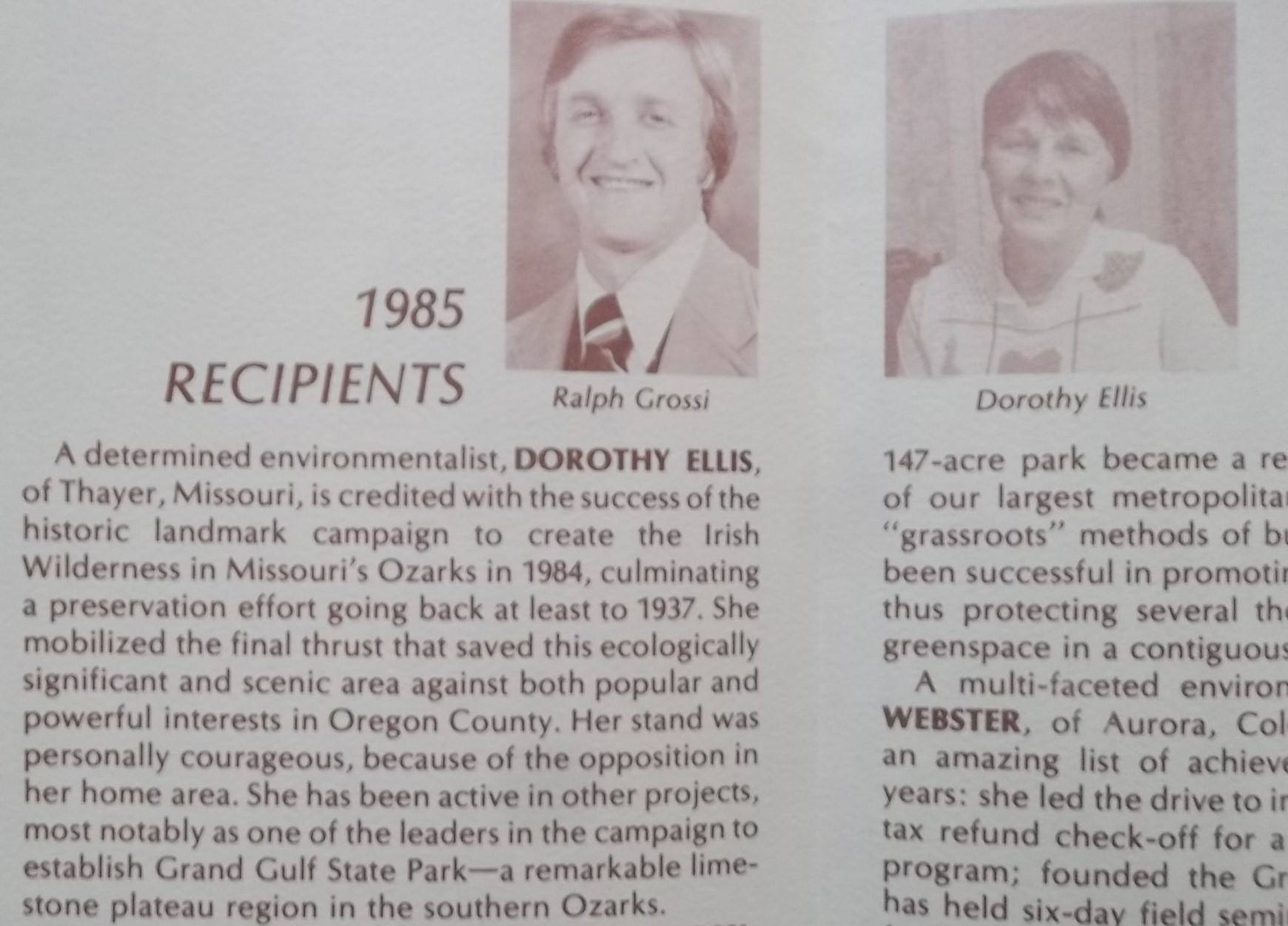
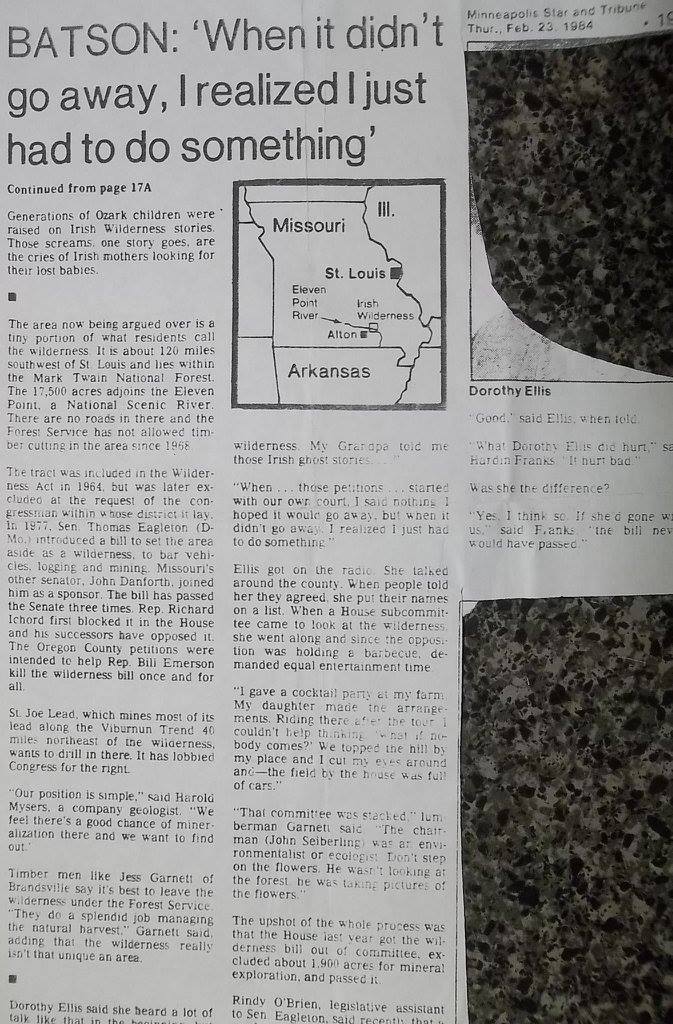
Original images are preserved and open at full resolution. Newspaper scans are primary sources, and their captions and dates should be read as printed.
Portrait supplied for the Dorothy Ellis collection.
Select the picture to enlarge the original scan.
1985 conservation award recognition, with Dorothy Ellis pictured among recipients.
Minneapolis Star and Tribune, February 23, 1984: “She didn’t go along with their petition…” (date in original filename differs from visible newspaper date).