Saving Greer Mill — Community Restoration and Preservation
Greer Mill survived long after commercial milling ended, but preserving its historic structure required the combined efforts of local residents, preservation organizations, supporters, and public agencies. This restoration history is presented separately from the mill’s nineteenth- and early-twentieth-century operating history.
Restoration chronology
- 2006: Greer Mill was listed in the National Register of Historic Places.
- 2010: The L-A-D Foundation documented preservation concerns and stabilization efforts.
- 2013–2014: Friends of the Eleven Point River and community supporters organized fundraising. Oregon County Historical Society accounts describe meetings, public presentations, trivia nights, dinners, auctions and a canoe race. The Historical Society also contributed $100 and offered books for fundraising.
- December 2014: A reported $5,000 L-A-D Foundation grant supported roof preservation, alongside foundation and stabilization work.
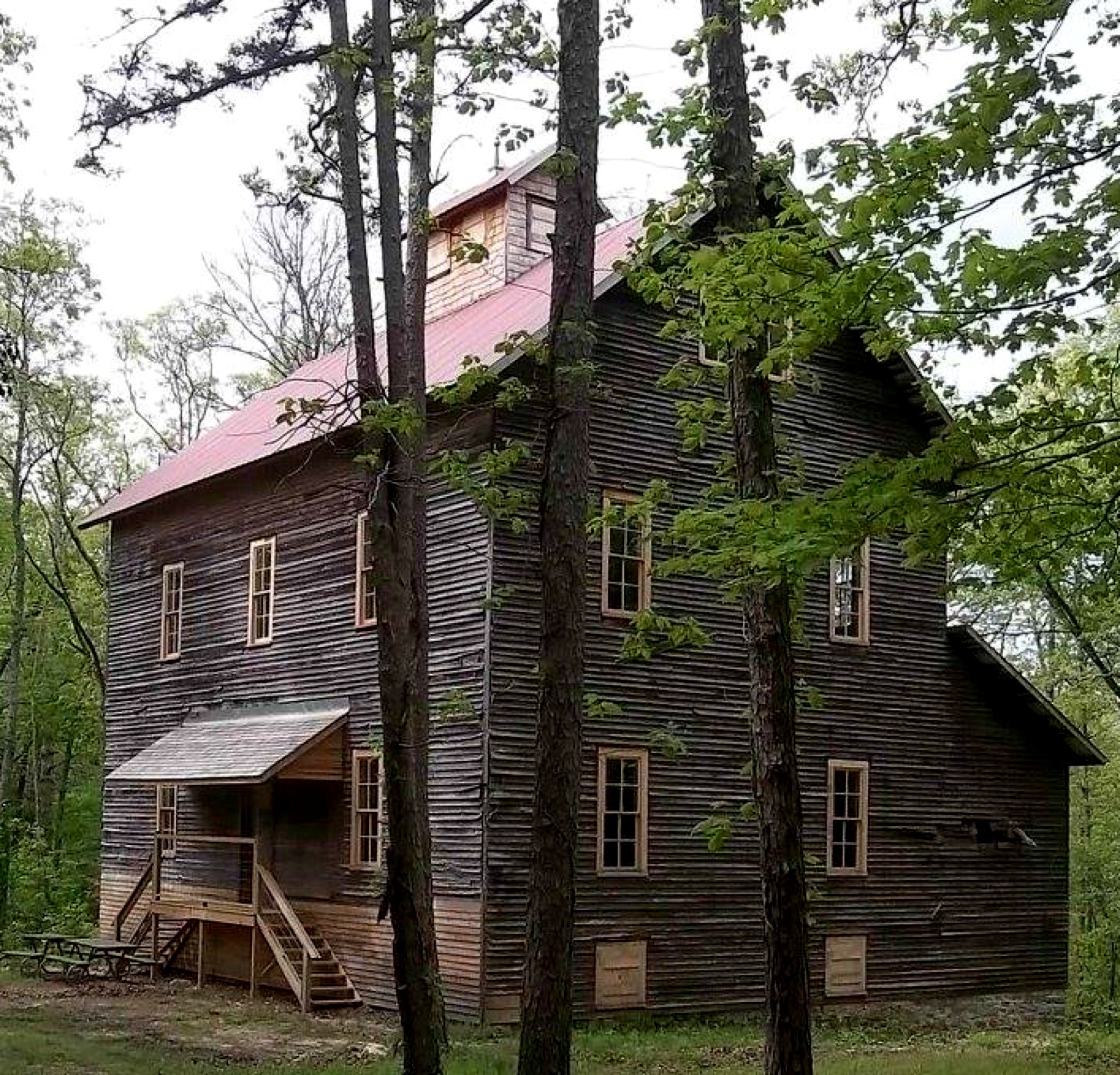
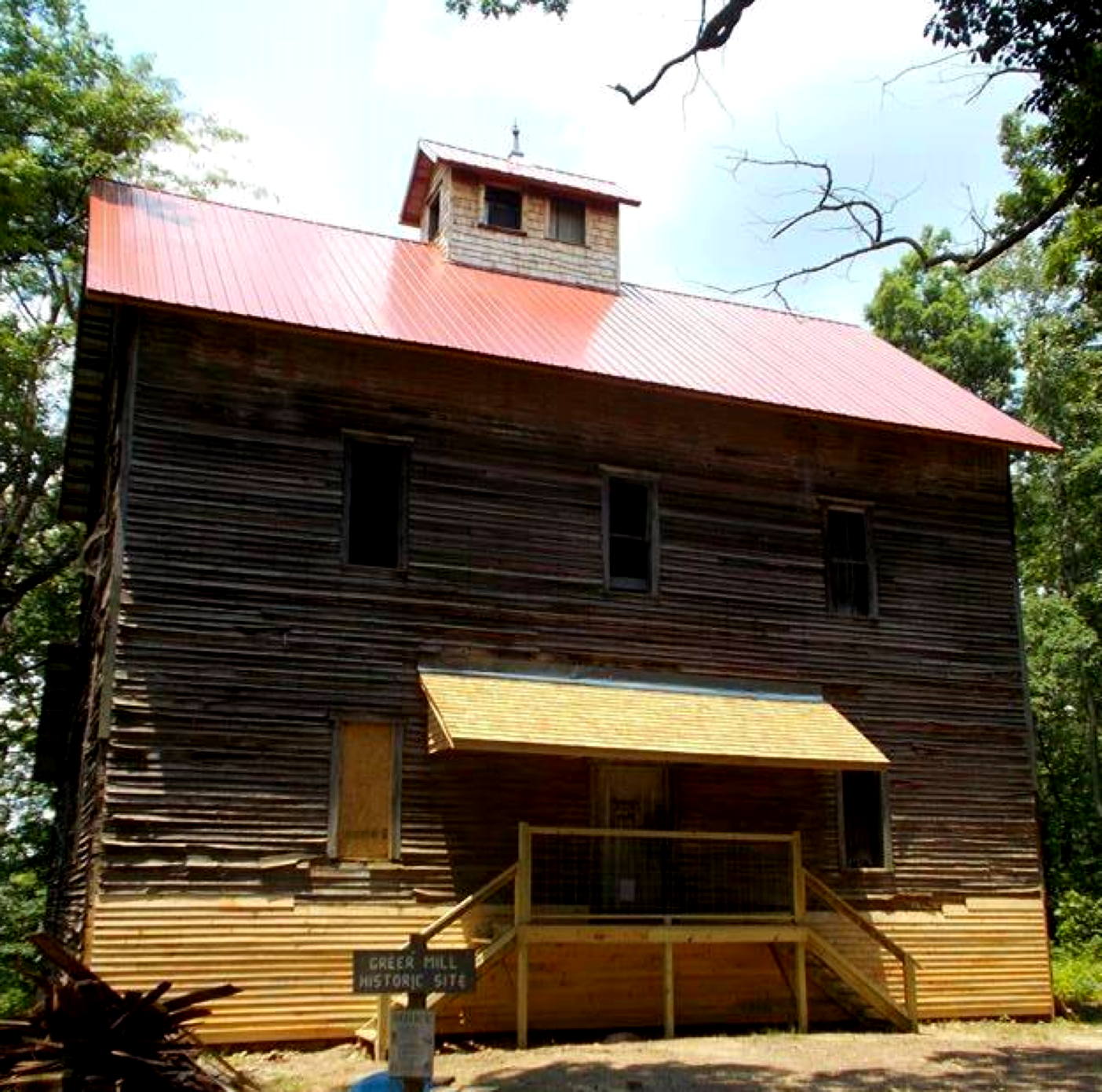
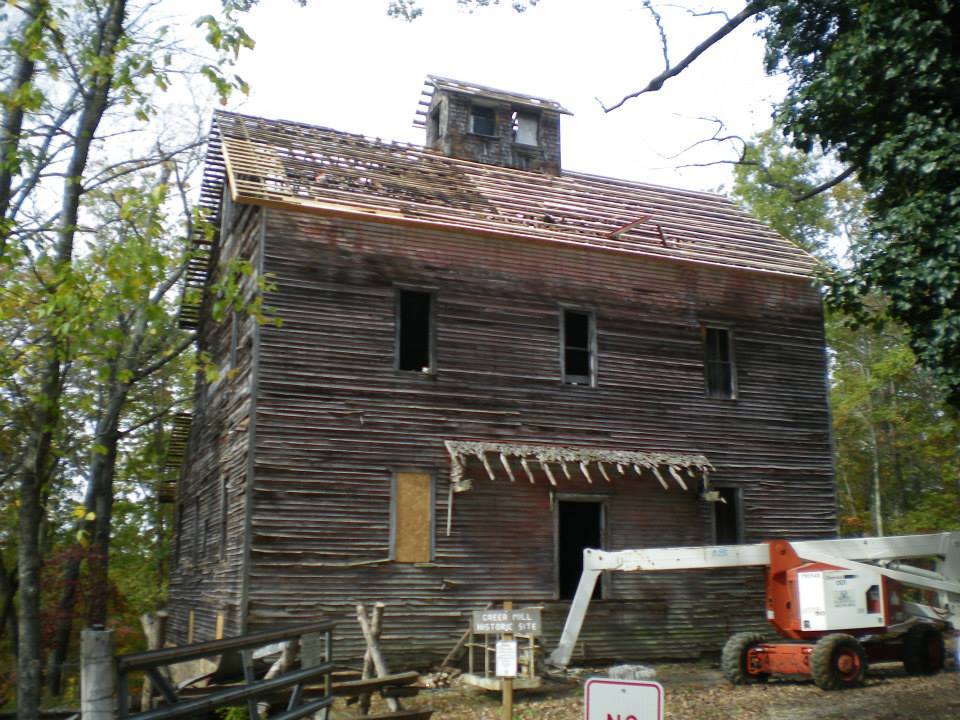
- 2014–2016: Preservation work included structural stabilization and repairs to framing, siding, floors, windows, roofing and the loading dock. Accounts credit HistoriCorps, the U.S. Forest Service, volunteers and craftspeople, including Amish workers.
- 2021: Friends of the Eleven Point River reportedly contributed another $6,500 toward preservation.
- 2022 and later: Additional preservation and visitor-access efforts were discussed. Confirm the specific completion dates and scope before describing any work as finished.
The people who saved the mill
Greer Mill's preservation was a community effort, not simply a building project. Friends of the Eleven Point River, Oregon County Historical Society supporters, HistoriCorps volunteers, the U.S. Forest Service, the L-A-D Foundation, and local workers helped preserve an irreplaceable reminder of Ozarks milling. Individual contributions and exact work dates should be credited from original meeting minutes and project records as they are verified.
Operating history: an unresolved date
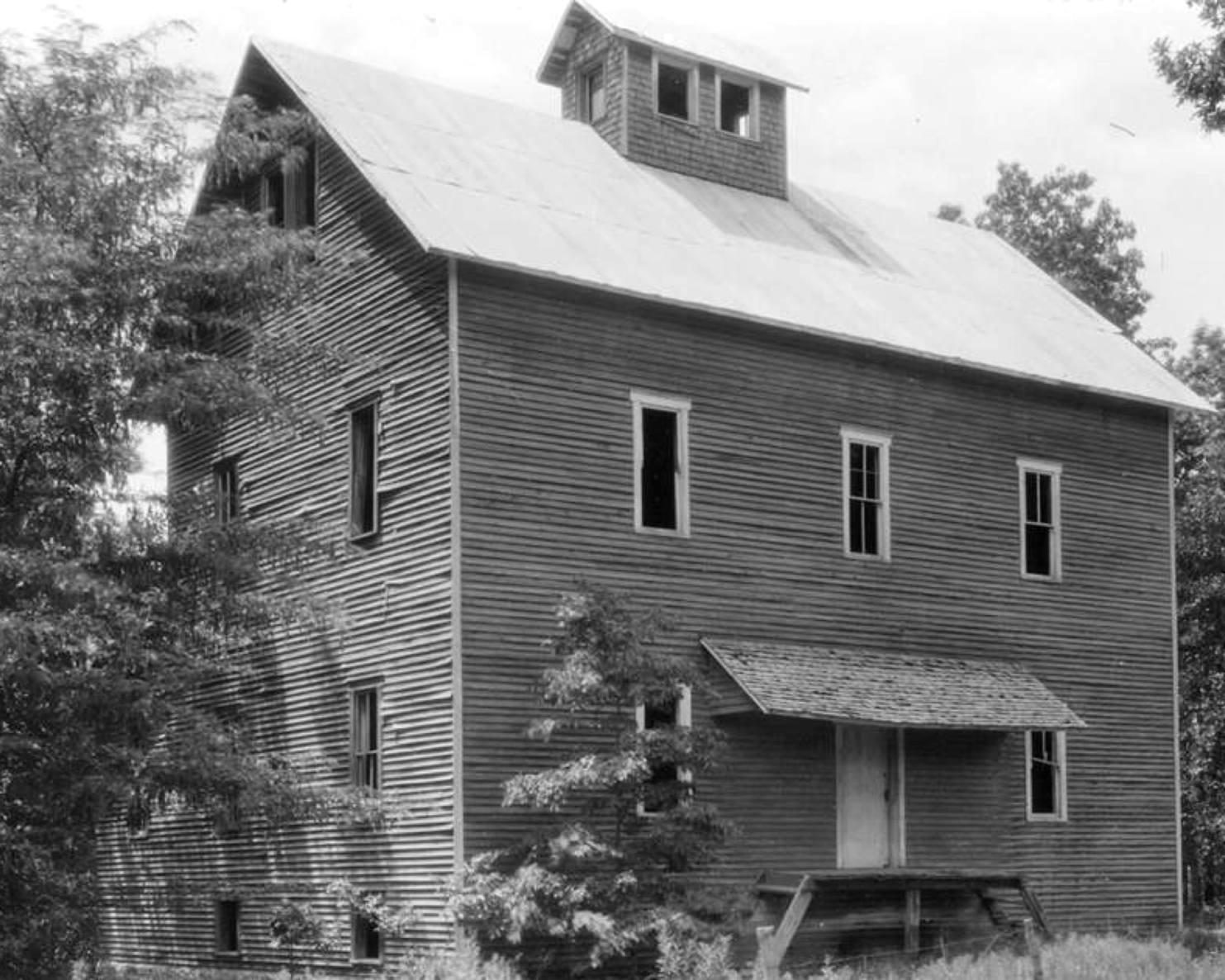
Published accounts disagree about whether commercial milling ended in 1916, 1920 or 1922. These dates should remain identified as conflicting reports until original business records or National Register documentation resolves the discrepancy. A restoration date must not be mistaken for a commercial operating date.
Mainprize family connection — oral history
Family recollection reports that the Mainprize family at one time owned four mills, including Greer Mill, Thayer Milling Company and Mammoth Spring Mill (in Arkansas). The fourth mill is not yet identified. Ownership dates and the nature of each interest remain subjects for documentary verification.
Historical sources and further reading
Archive note: Existing original photographs, their filenames, captions, and Jon Alan Owens’s recollections are preserved elsewhere on this page. Restoration photographs should retain their supplied attribution and provenance. Falling Springs cabin photographs by Anthony Lee belong to the separate Falling Springs collection.
Firsthand memories and historical accounts
Living at Greer Springs & Mill Building Memories — Jon Alan Owens
Open the original supplied Word document
Living at Greer Springs & Mill Building Memories!
By: Jon Alan Owens
My father, G.R. or Rich Owens, started working full time for Louis Denning as General Manager of six thousand plus acres of Greer Springs properties a few months after I was born. In earlier years, he rented one of the river bottom farms on the Eleven Point River from Mr. Denning, and owned grocery stores in Greer, Alton, & Macks Greek. When an older lodge located on the far side of the spring branch burned down, a new lodge complex was built on the near side by my father and his younger brother (Tom Owens). The new complex consisted of the main lodge, small sleeping cabins, and a large screened-in day room. A dock over the stream with a live trap box for holding trout was located less than a hundred feet in back of the main lodge.
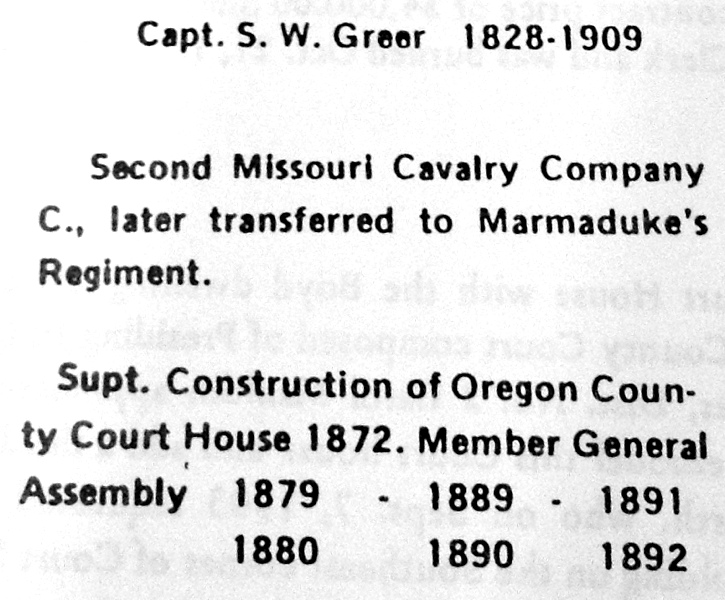
The Owens family lived in the house Captain Samuel Greer built, which was heated by a fireplace in the living room and wood stove in the kitchen. Incorporated into the back of this house was a one-room log house built many years earlier by the Captain. The log cabin portion was the bedroom for my older sisters, brothers, and myself. Because the log room was so far from either heat source, and there was no insulation, it was very cold there in the winter. Although there was an old fireplace in the log cabin, it was unsafe for use and was blocked off. At bedtime, Mother would warm up the beds using a heated iron skillet, but the heat was short-lived under heavy homemade quilts. In the loft of the cabin, Mother stored bricks of her homemade soap. To this day, I remember the musty aroma of the soap drifting into the bedroom below.
Captain Greer’s House
On the left side of the house was the kitchen with a screened-in porch in back, and on the right side was the living room. Bedrooms were located in back of the living room. The front of the house faced Highway 19, which was a dusty gravel road. Four evenly spaced red cedar trees planted by Captain Greer grew in the front of the house. In back of the dwelling, there was a shed and a smokehouse, where Father dried the pelts of fur animals he trapped on the Greer Springs and Eleven Point River.
Captain Greer’s Log House
In the picture above, the chimney of the newer house is visible before it and the log house were torn down by the new property owners. Down the steep canyon wall in back of the log house is the Greer Springs cave, where a cold box placed in the cold flowing stream at the mouth of the cave kept foods from spoiling a little longer. When the Owens family lived in the Captain’s house, there was no electricity available that far into the countryside, so lighting at night was by kerosene lamps and candles.
A short distance in back of the log house was once a small cemetery. Although the bodies had been relocated to the Smith Cemetery in Alton, the depressions in the ground bore evidence of the grief once known by Captain Greer’s family. One of the graves would have been that of his son who was killed while felling a timber during construction of the dam. The roar of the swiftly flowing stream down the canyon was always audible at the log house, and according to legend, was a constant torment to the son’s young bride reminding her of his death.
Elementary education of eight students was conducted in a one-room schoolhouse located about a mile away off Highway 19. My brothers and I walked to and from classes. There was one teacher for all grades. The schoolhouse was also used for Christmas parties and other community events to raise money for a family down on their luck. Students brought their lunches to school in metal lunch pails. In the picture below, I am the second boy on the left, Richard is standing next to me, and Kelly is the fourth boy from the left in the back row. The building was heated by a large potbelly wood stove. Drinking water was collected from the runoff of the tin roof. After passing through a rock and sand filter, the rainwater flowed into a cistern below. There was no chemical treatment of the water.
Greer Elementary Students (1948–1949)
When Father returned to work as General Manager for Louis Denning and moved the family into the house across from the mill building, economic conditions in the area had improved with electricity, telephone, and a paved Highway 19.
Mother & Father (1955)
When Mr. Denning or his guests would arrive to stay at the lodge, they would honk their vehicle’s horn. Then, someone in the Owens family would run over to the gate, unlock and open it for them hoping for a tip. One of the frequent guests was Al Griesedieck, owner of the Hyde Park Brewery in St. Louis, who always tipped well. Al treated the family kindly and was a favorite of all the guests. Although I don’t recall the event, my brother Richard remembers when Al took my brothers and me to the newly opened Marshal Auto store in Alton telling us that he would buy each of us anything we wanted in the store. Brother Rich wanted to buy a bicycle, but our older brother Kelly told Al all we needed was a baseball glove, ball, and bat. When Al confirmed that was all we wanted, he agreed with the purchase.
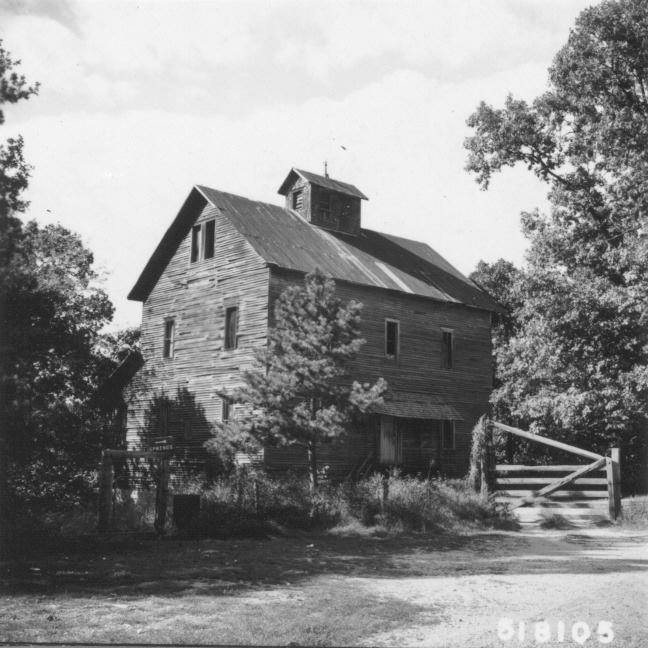
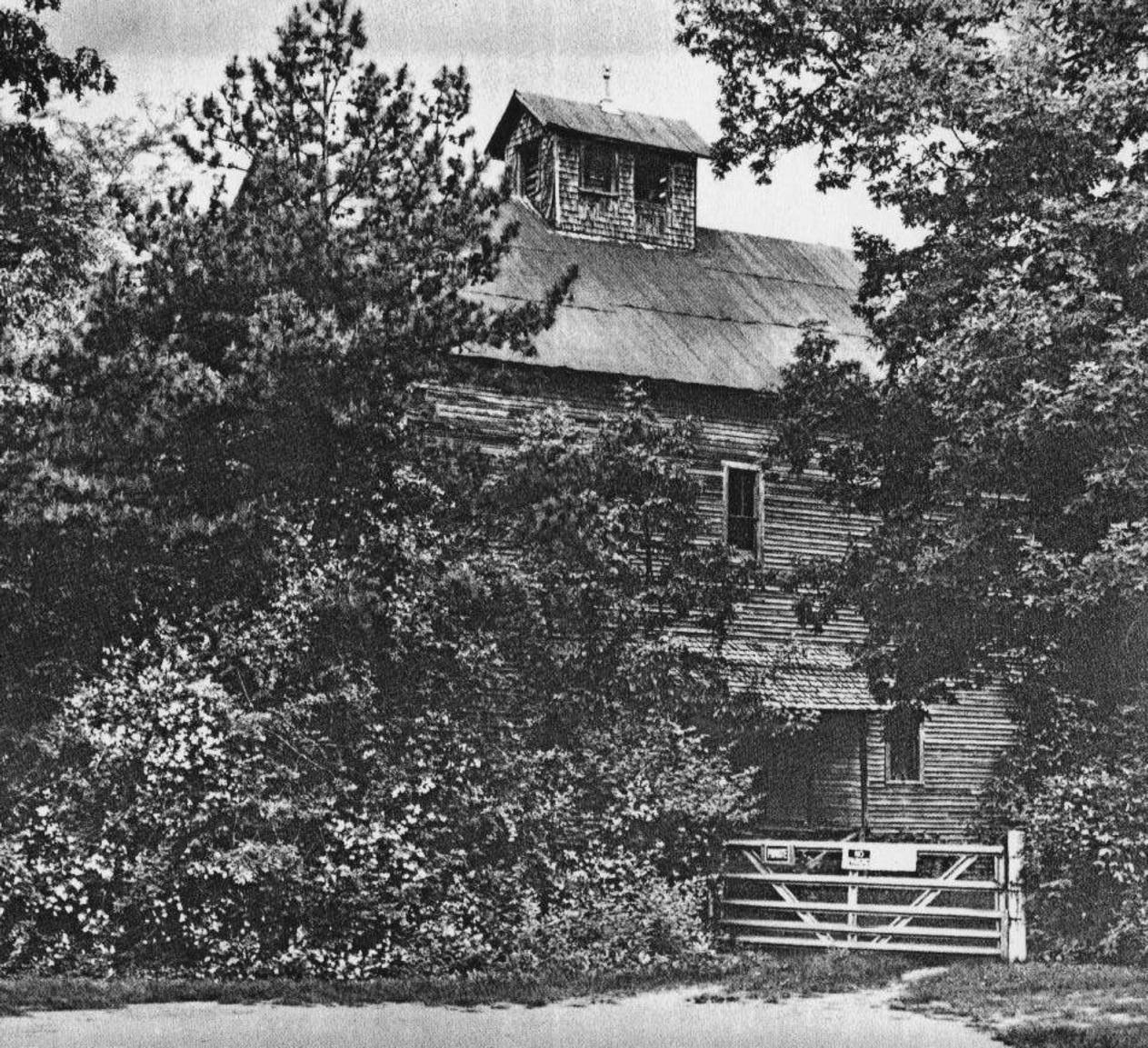
With the exception of my father, I figure that I’ve spent more time in the old mill building than anyone else since operations ceased. Because of my fear of commonly found rattlesnakes and copperheads in the area—especially in the spring and summer—my favorite place in the mill was in the cupola, where a person could hear the rushing stream below the mill.
Before she passed away several years ago, my mother could remember when she was about ten years old (1911) traveling to the mill with her father with a wagon full of corn to have it ground into cornmeal, and staying overnight at the cook (bunk) house located nearby before returning to the farm on Spring Creek the next day.
My earliest memory of the mill building was going there with my father to feed a workhorse he kept stabled in the basement when the family moved to Greer Springs, living in Captain Greer’s House. Father also used the mill to store hay cut off a river bottom farm rented from Louis Denning for cousin George Owens. In the picture above, the area to father’s right arm was his woodworking shop to build honeybee hives and other things. One of those items was a handsome red cedar gun rack to hold the rifles Louis Denning had given him earlier. In addition to shotguns, there was a Winchester Model 1896, 33 WCF lever-action rifle, which the elder Mr. Denning hunted with on safaris in Africa. Over the many years of my father hunting with the rifle, he killed lots of deer to supplement food for the family.
When I was a young boy, a cousin and I figured we could have some fun with the tourists coming to visit Greer Springs. By filling some old clothes with rags, fashioning a head from a pillow, and attaching a hat, we made a human-looking dummy. Then we would take the dummy to the cupola at the mill and pitch it out the window as a carload of people would start to get out, while we yelled for help as the dummy tumbled down the steep roof onto the ground three stories below. The trick almost always worked and gave us great fun until one day my mother happened to look out the window of the house across the highway and thought one of us had fallen. Needless to say, that ended our fun with the dummy.
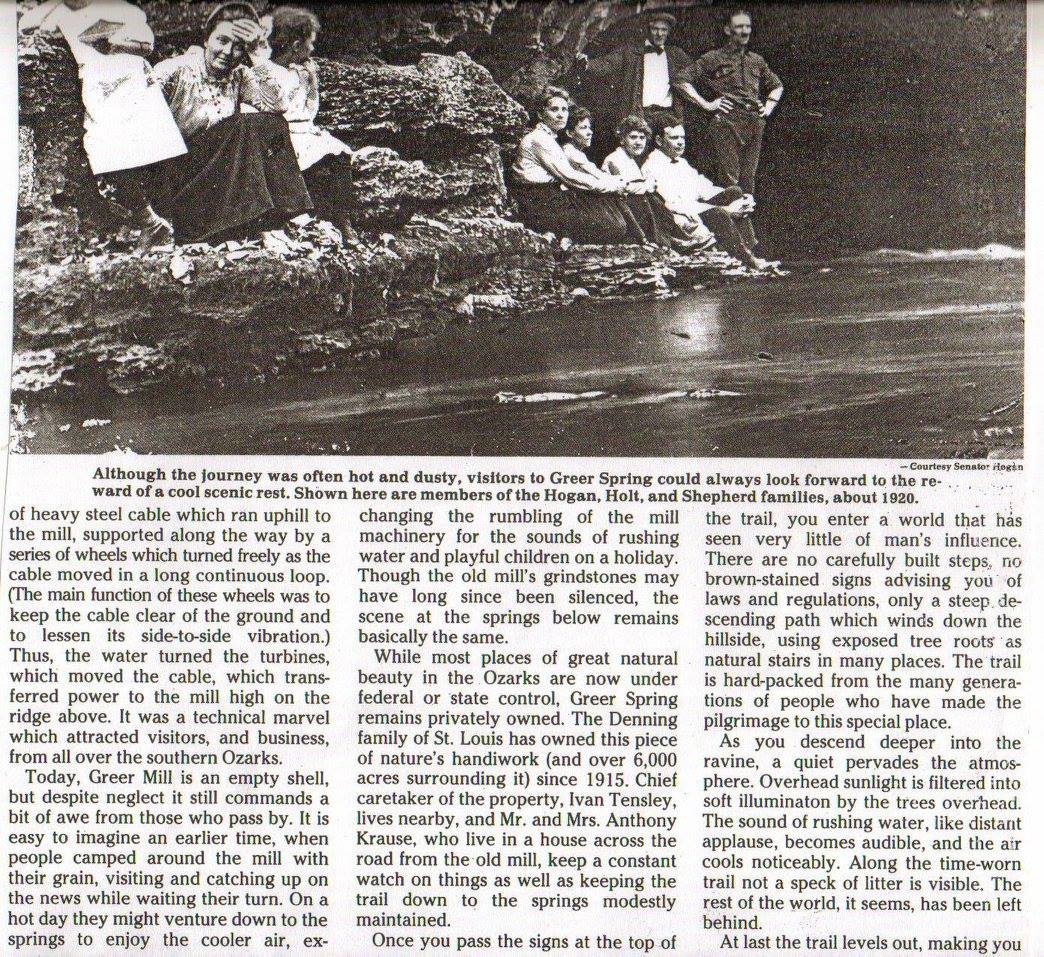
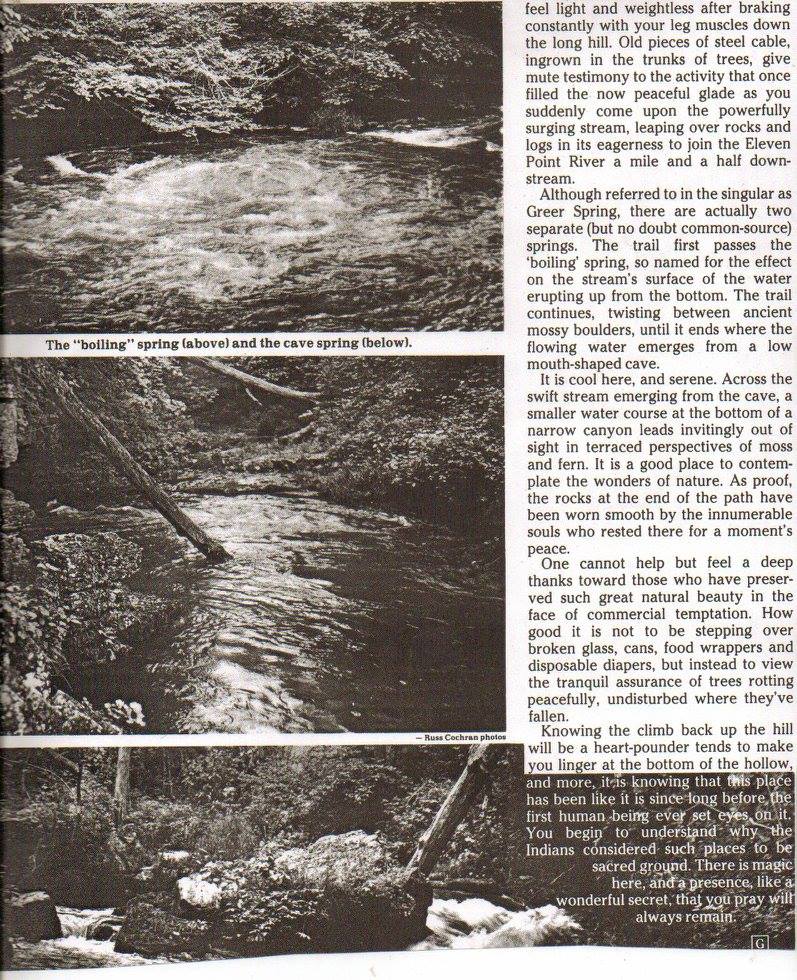
Another favorite place where I used to play was along the stream from the cave to the boil. Although the water there was cold and swift, it normally wasn’t too deep to wade across to the other side.
Greer Springs Cave Stream
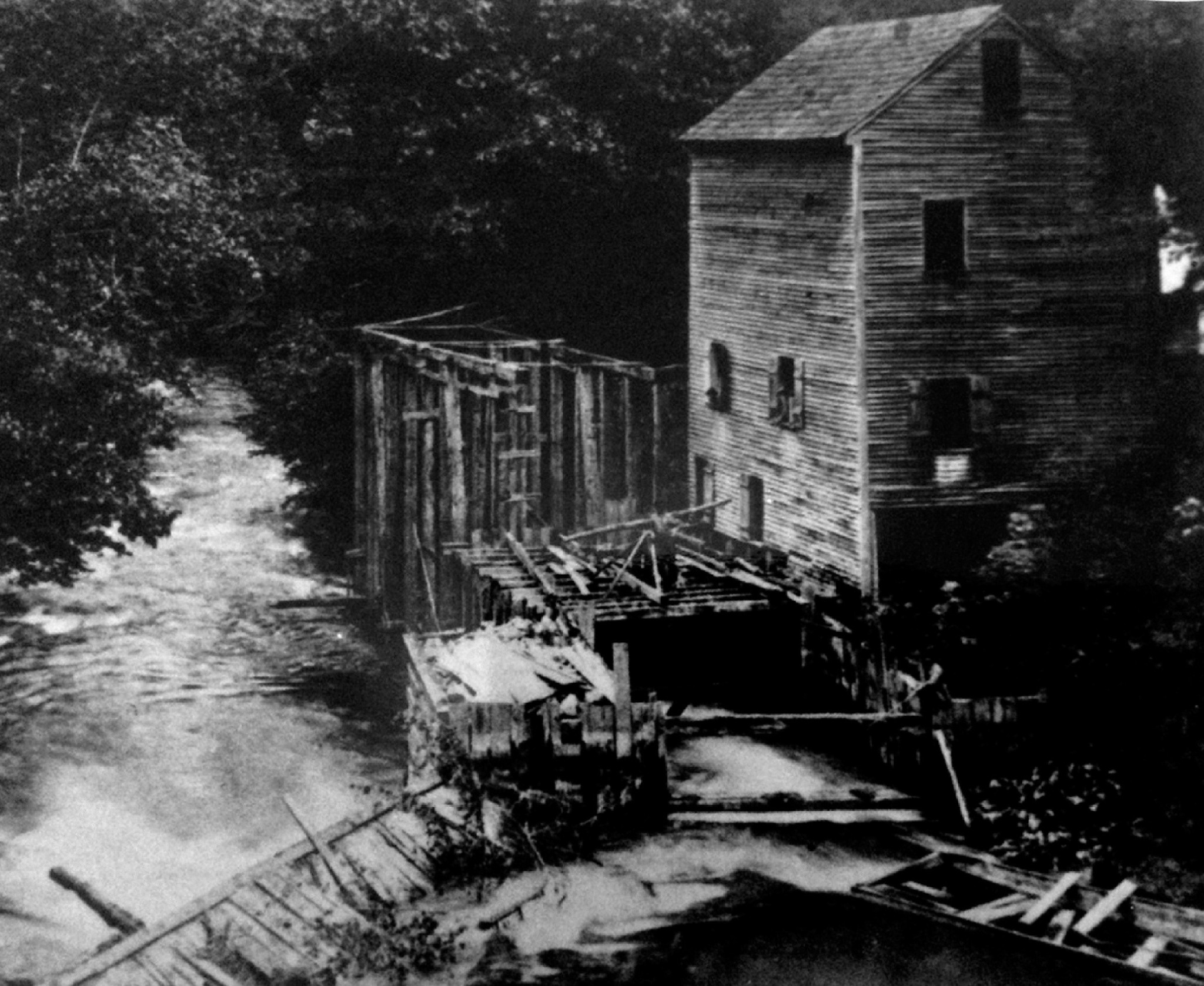
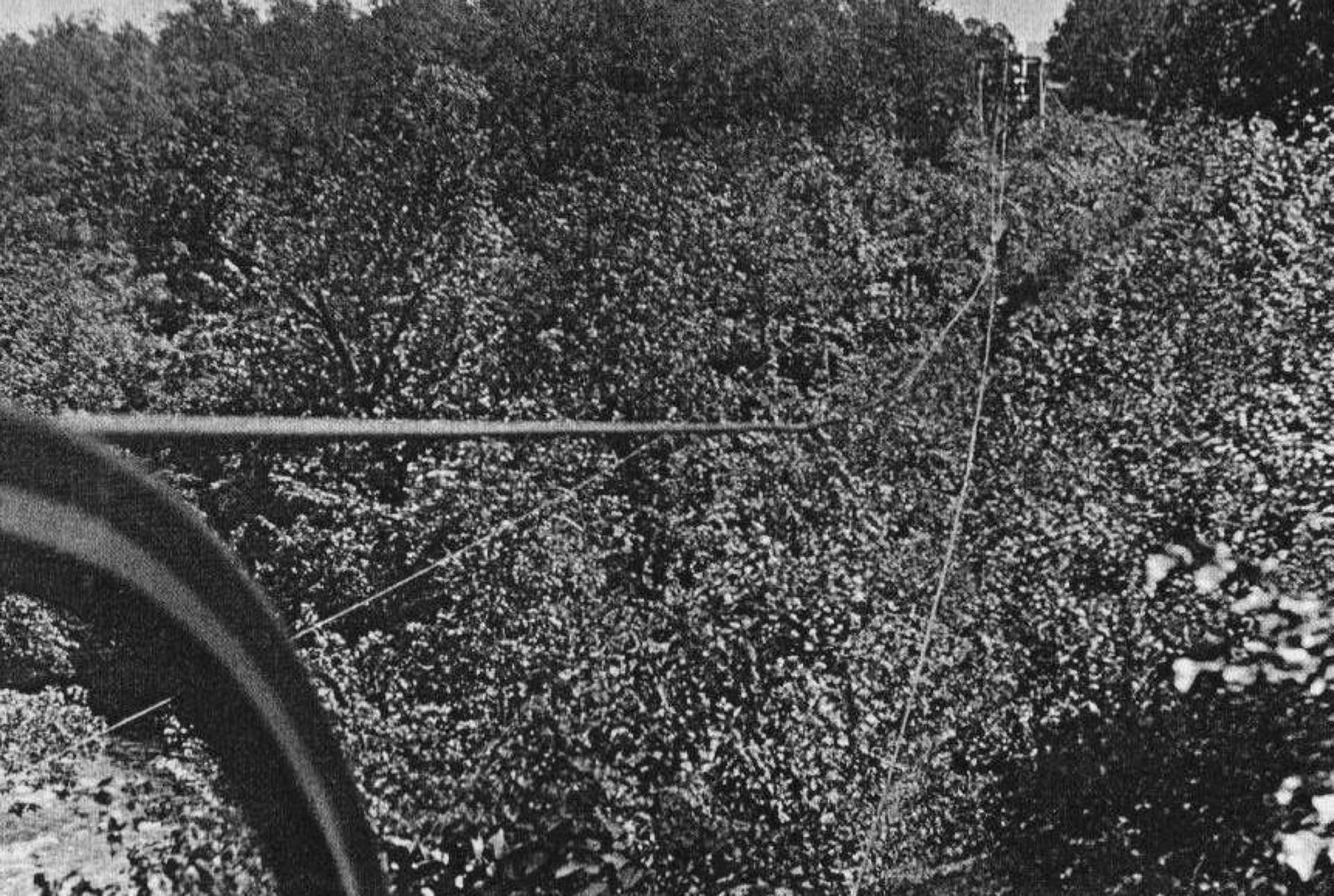
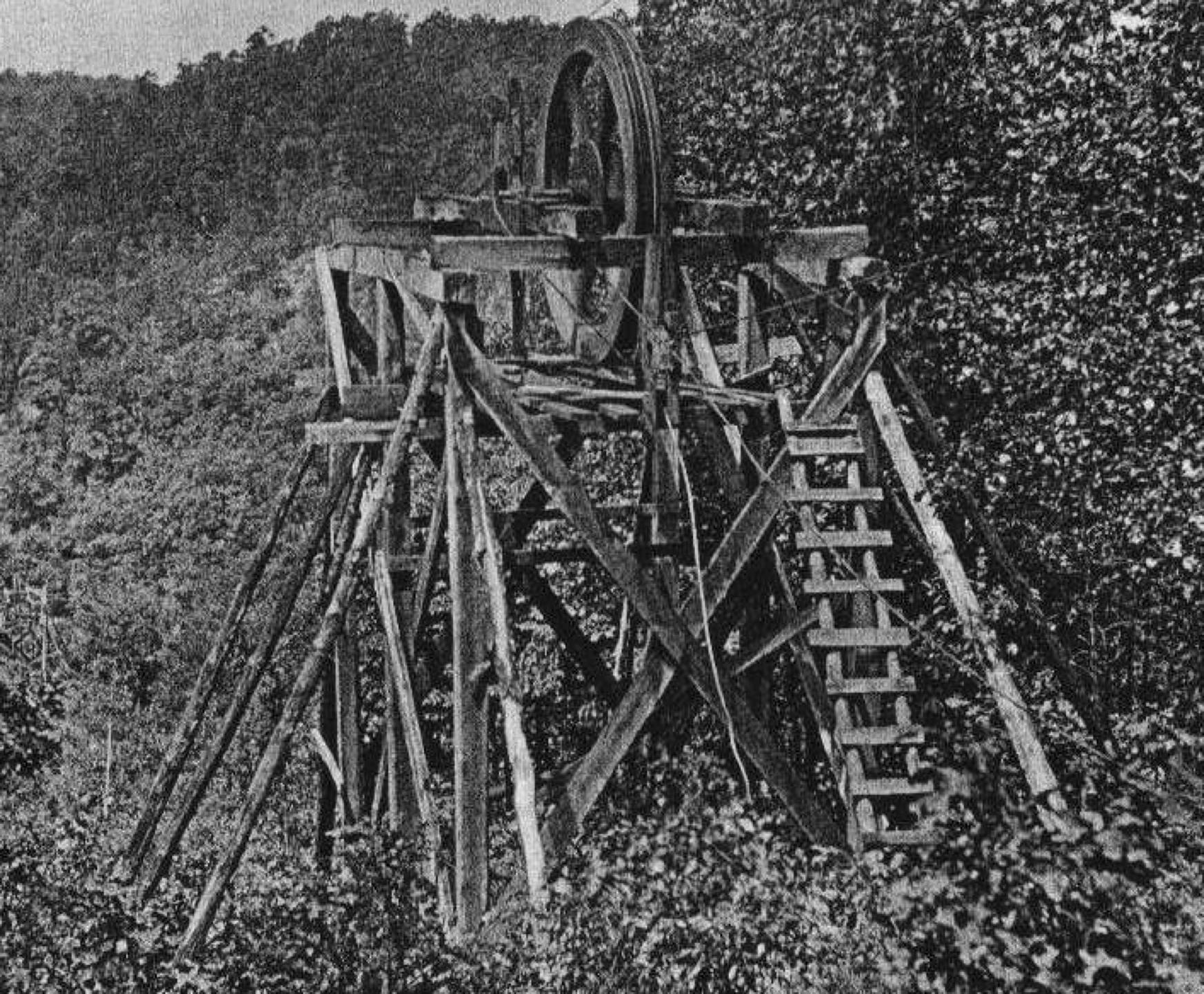
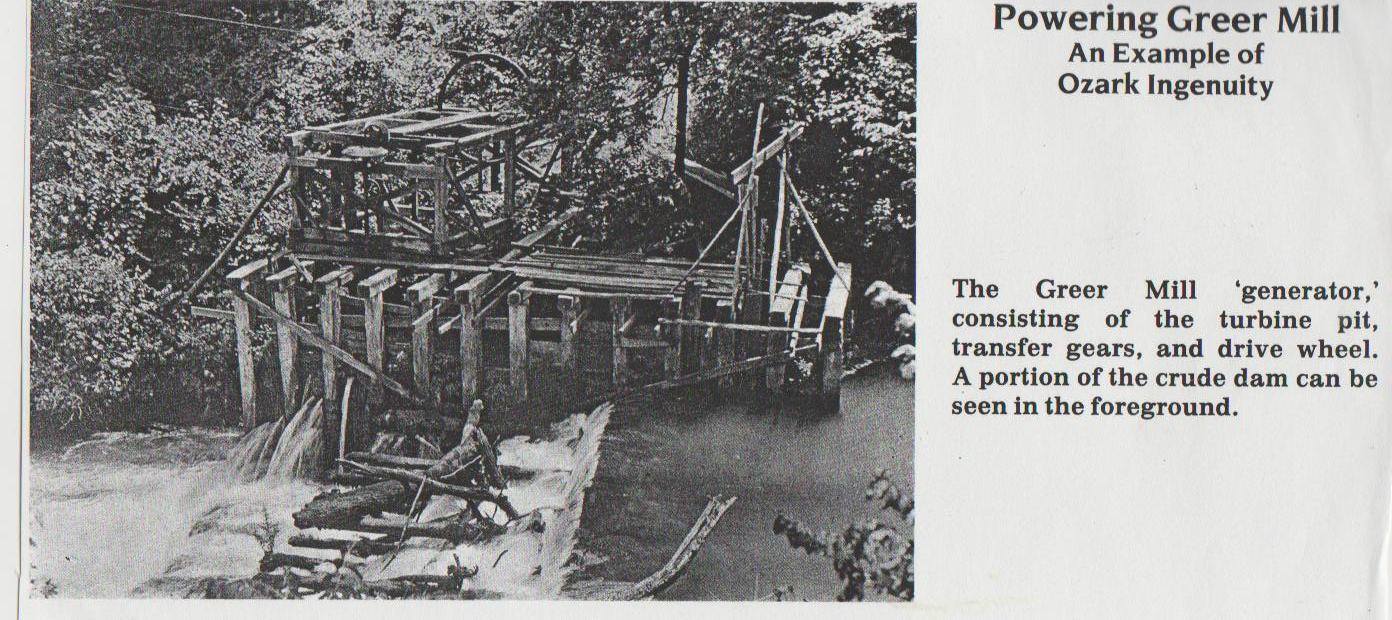
To power the mill when it was in operation, there was a water turbine connected to a flywheel and cable to transmit power up the steep hillside to the mill located over a thousand feet away. In order to accomplish this, there were three evenly spaced relay towers with flywheels on each. Although the towers were long gone when the family lived at Greer Springs, there was a considerable amount of cable left along the old roadbed to where the dam was. Some of this cable, my father strung along a trail to the stream’s edge to assist him on his frequent hikes monitoring for illegal fishing.
Although most of the processing machinery in the mill building had been removed many years earlier, there were a few very large pieces still present the last time I was inside the building in 1956, when I made one last visit to the cupola to hear the flow of the spring branch and to say goodbye to my old friend—the mill building.
The Denning family and most of their guests to the lodge were wealthy business families from St. Louis who were in the beer brewery business, but ran other businesses during Prohibition from 1920 through 1933 such as brewing alcohol-free near beer. Of all the guests to the lodge, the Griesedieck brothers were perhaps the most famous. Once Congress repealed the law forbidding brewing of alcohol in 1933, the Falstaff brand owned by the Griesedieck family received the first permit to resume operations to brew beer.
Life for most people living in the country in the 1940s & 1950s was difficult, yet not as challenging as in the 1930s during the Depression. Neighbors and friends helped one another in times of need. Many worked on small farms from sunup to late in the day. To feed their families, people grew large gardens and canned fruits and vegetables. Most country people raised chickens for a supply of eggs and fryers. In addition, the men hunted squirrels, rabbits, and deer. My mother washed all the family clothing by hand each week and hung it up to dry. A large cast-iron kettle was used to heat the wash water and make soap.
Gib, Jon, & Rich Owens (1955)
Pictured above sitting on the Jeep’s right tailgate is my lifelong friend Gilbert Simmons who lived in Alton. Gib’s father owned the Locker Plant, where slaughtering, meat packing, ice, and cold storage were available. Gib and I became good friends when my father moved the family back to Alton in 1949 to open a new fifteen-stool café. After operating the café and owning another grocery store, he moved the family back to Greer Springs to work for Louis Denning once again. When the picture was taken, I am sitting in the back of my father driving. Louis Denning bought the new Willys Jeep in 1955 for use at Greer Springs.
Greer Springs History — Tom Kruzen
Open the original supplied Word document
Tom Kruzen
February 3 at 8:41am
Today marks a passing of an era. Norma Kraus has been laid to rest.
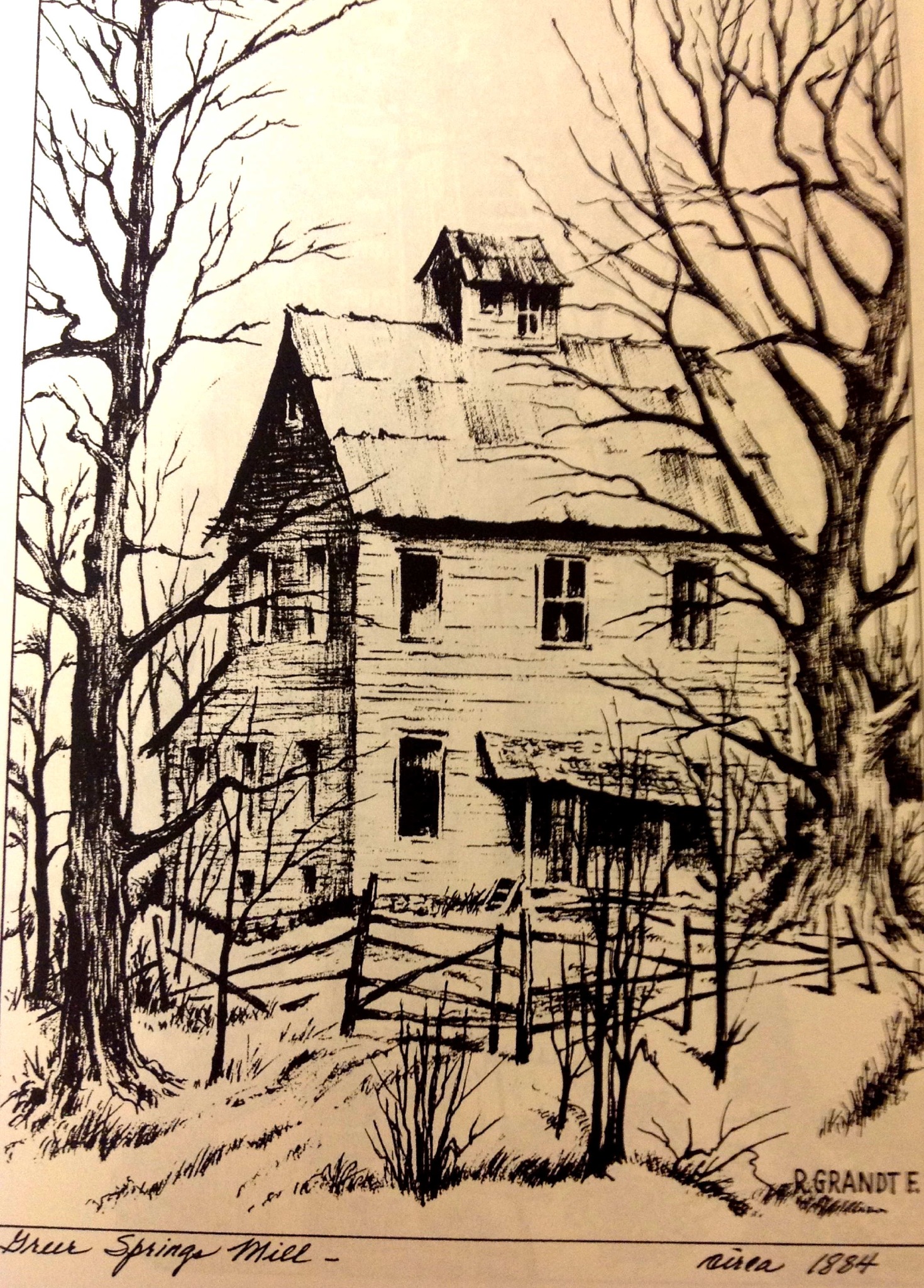
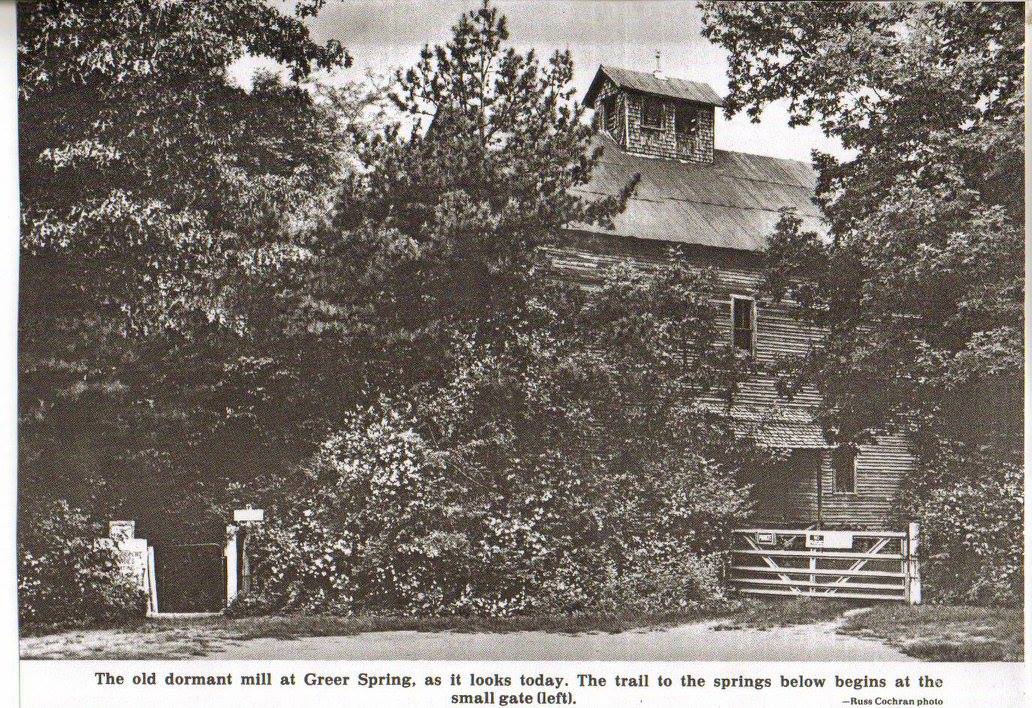
In the 1980’s when we first set eyes on Greer Spring, it was privately owned by a family from St. Louis named Dennig. On Rt. 19 across from the old decaying mill was a small brown house where a caretaker lived. Her name was Norma Kraus. When one parked the car either across the road by the mill or on her widened driveway, Norma would come from the front door with a loaded shotgun. We would ask her if it was ok if we went down to the spring. We had to listen to her litany first of “don’t take anything down there with you, food, wrappers, cans –nothing. You may take cameras but don’t leave any film canisters.” We would proceed down the narrow and treacherous path to the magnificence that was Greer Spring. In those days the path meandered around and over boulders and along narrow precipices. Half way down, you could hear the rushing waters and then as the tree canopy opened up-you saw the boil, the thirty foot diameter round churn of blue-green water that boiled up off the surface anywhere from 2-3 feet. Most people who saw that for the first time held their mouths open and gasped. That was when the snapping of cameras could be heard. As one proceeded along the stream , one came to a cave moth, out of which came a furious rush of more water. All of the water from both holes cascaded down a rock tumble 65 feet until it reached the main flow of the Eleven Point River. The film ran out and after 30 to 60 minutes, one could contain the beauty no longer and people had to climb back up the trail until they reached Norma, sitting on her front porch, still with shotgun in hand! Norma would ask how we liked it and if we saw any others down at the spring. We might show her our empty hands, she counted every film box or can that would emerge from our pockets. Rarely we would bring up a spent cigarette and tell her we found it on the trail. Needless to say we did not mind her security routine. It was our price of admission to a true natural wonder in our own back yard.
After some time, we had heard that Anheuser-Busch was interested in buying the spring to set up a bottling plant there. The old Dennig patriarch had passed away and the property, including the spring was up for sale. Horrors! The pristine nature of Greer Spring could be lost forever-for profit and thousands of people recoiled with letters to newspapers! To the rescue came Leo Drey, a man of means from a canning jar and a bunch of timber land in the area who believed in single tree selection logging and not clear cutting that was prevalent in state and federal resource managers of the day. Leo bought the spring and 8000 surrounding acres to essentially leave it as it was. The USDA Forest Service expressed interest in the spring and the land but had to operate through Congress. Leo Drey paid $4 million and Anheuser -Busch kicked in a half million (to save their reputation) A couple of years later Congress got around to buying Greer and the 8000 acres for the Forest service with stipulations that the spring would be open to the public and the forested land would not be cut. Congress would only come up with part of the money and Leo Drey offered a million dollar gift.
The Forest Service immediately built a new parking area complete with a new trail that switch backed in an easier way down to the spring a few stone benches were made along the way and the path was made in such a way that it was not as easily eroded as the old one. Unfortunately, the spring’s old guardian, Norma Kraus was not part of the deal. My friends and I always thought that was a mistake not to maintain Norma as guardian/greeter. The Spring and pathway were certainly kept more litter free under her watchful eyes. Hopefully someone will again live in Norma’s house and guard over the newly renovated Mill to stave off any vandalism as happened last year at Falling Spring Mill.